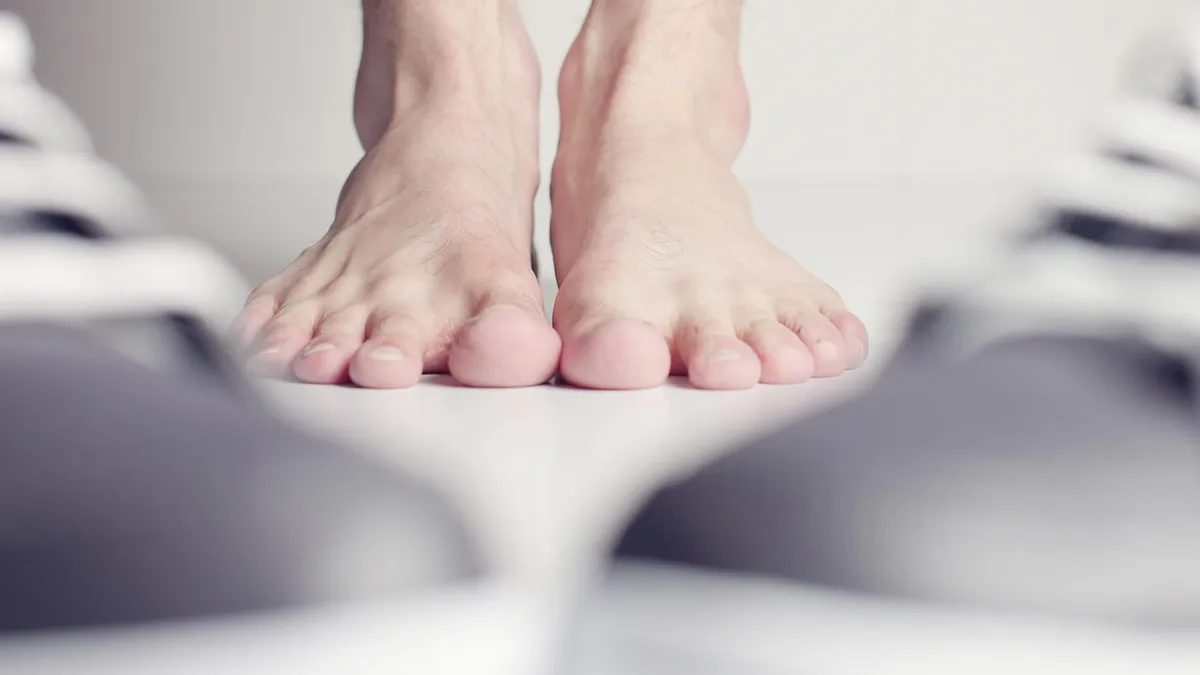
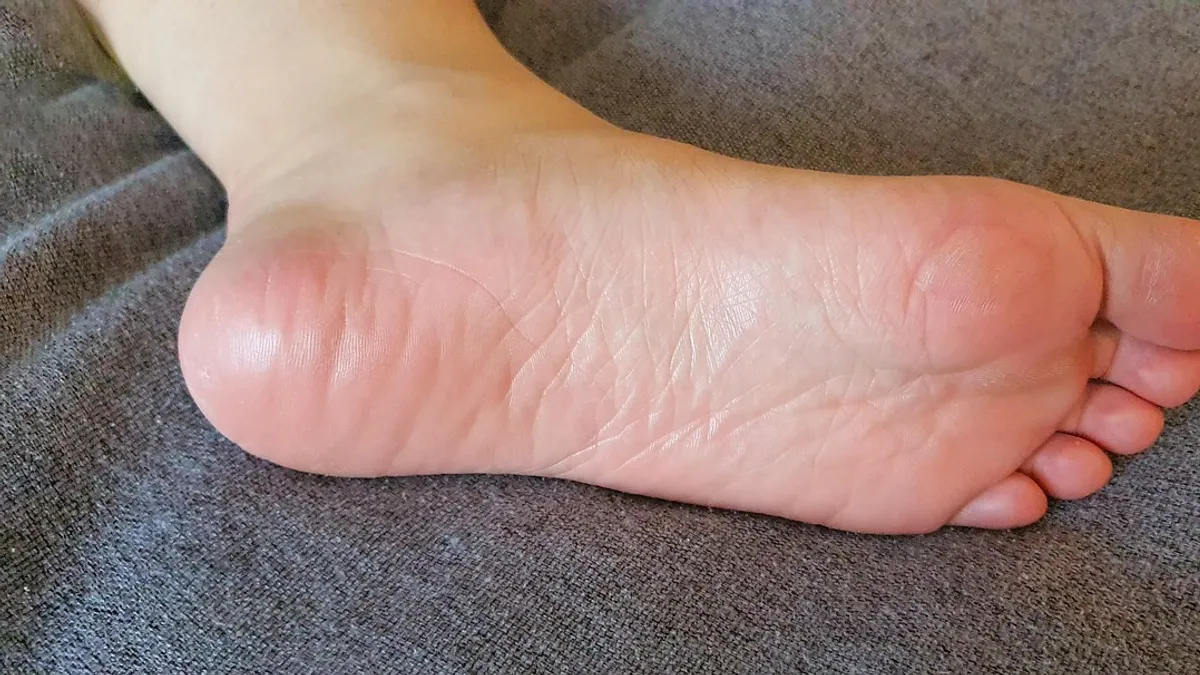
Barefoot shoes can help resolve chronic plantar fasciitis by strengthening intrinsic foot musculature, restoring natural forefoot splay, and promoting Achilles tendon elasticity, but only when introduced through a gradual rehabilitation protocol. Switching abruptly to zero-drop minimalist footwear during an acute inflammatory flare-up can worsen tissue strain; however, long-term minimalist walking eliminates reliance on artificial arch supports and addresses the root biomechanical weakness causing plantar fascia overload.
Key Takeaways
-
Rehabilitative, Not Immediate: Barefoot footwear serves as a progressive strengthening tool rather than an instant analgesic cushion, addressing intrinsic muscular atrophy rather than masking symptoms.
-
Restoring the Windlass Mechanism: Wide toe boxes allow the hallux (big toe) to align straight, which restores natural tension along the plantar aponeurosis and prevents vascular compression at the heel.
-
Zero-Drop Decompression: Eliminating elevated heels restores natural Achilles tendon length and calf elasticity, reducing the constant tensile pull on the calcaneal attachment.
-
Tropical Adaptation: Malaysian walkers must account for heat-induced foot swelling, high humidity, and afternoon monsoon downpours by prioritizing wide-fitting, breathable, quick-draining minimalist models.
-
Accessible Entry Pricing: Transitioning does not require premium overseas imports; accessible options like Saguaro range from RM84 to RM237, compared to RM560 to RM1,020 for boutique European imports.
Biomechanics: How Minimalist Footwear Rebuilds the Plantar Fascia
Transitioning to zero-drop minimalist footwear strengthens the abductor hallucis and intrinsic foot muscles, transforming the foot from a passive, braced structure into an active shock absorber that naturally relieves plantar fascia tension.
To understand why plantar fasciitis develops, one must examine how conventional footwear alters natural foot architecture. Traditional running shoes and office footwear feature three distinct design elements: an elevated heel (usually an 8mm to 12mm drop), rigid arch supports, and a tapered, upturned toe box (toe spring). While these features offer temporary comfort by offloading mechanical work from the foot muscles, they inadvertently induce disuse atrophy in the deep intrinsic plantar muscles—most notably the flexor digitorum brevis, abductor digiti minimi, and abductor hallucis.
When the abductor hallucis weakens and the big toe is forced inward by narrow footwear (hallux valgus alignment), the base of the first metatarsal loses stability. Furthermore, inward deviation of the big toe stretches and kinks the lateral plantar artery, compromising blood flow directly to the insertion point of the plantar fascia at the medial tubercle of the calcaneus. Starved of adequate circulation and deprived of muscular support from beneath, the plantar fascia experiences excessive micro-tearing under normal body weight. This condition is more accurately characterized as plantar fasciosis—a degenerative collagen breakdown caused by chronic strain and poor vascularity—rather than simple acute inflammation.
Barefoot shoes counteract this breakdown by removing artificial bracing and re-engaging the windlass mechanism. The windlass mechanism is the anatomical pulley system wherein dorsiflexion of the toes tightens the plantar fascia, automatically elevating the medial longitudinal arch and packing the tarsal bones into a rigid lever for propulsion. In a true barefoot shoe featuring a wide, foot-shaped toe box, the hallux can splay outward laterally. This alignment allows the windlass mechanism to engage symmetrically, distributing ground reaction forces across the entire metatarsal pad rather than concentrating stress upon the heel.
Additionally, zero-drop soles align the calcaneus and forefoot on an identical horizontal plane. Conventional elevated heels place the triceps surae (gastrocnemius and soleus) and the Achilles tendon in a state of chronic passive shortening. Because the paratenon of the Achilles tendon is anatomically continuous with the superficial fibers of the plantar fascia, tight calves exert constant baseline tension on the bottom of the foot. Flattening the footbed allows the Achilles tendon to lengthen through its full operational excursion, restoring natural elastic recoil and dampening shock loads before they reach the plantar aponeurosis.
For Malaysian walkers, these biomechanical realities interact directly with common regional anatomical traits. Southeast Asian populations frequently exhibit a broader forefoot morphology and a higher natural prevalence of flexible pes planus (flat feet). Forcing broad, low-arch Asian feet into rigid, narrow Western shoes compresses the digital nerves and forces the medial arch to collapse inward against artificial contours. By contrast, a minimalist sole provides a stable, uninhibited platform where the arch can flex, load, and rebound dynamically without lateral impingement.
Malaysian Minimalist Landscape: Real Landed Costs and Climate Realities
In Malaysia’s hot and humid urban climate, barefoot shoe selection requires balancing wide-toe box anatomy, quick-drying breathable uppers, and transparent landed pricing against steep import tariffs.
Adopting barefoot footwear in Kuala Lumpur, Penang, or Johor Bahru presents practical challenges that standard European or North American guides overlook. High relative humidity (often exceeding 80%), torrential afternoon thunderstorms, and high ambient pavement temperatures mean that heavy leather or non-breathable synthetic barefoot shoes can trap sweat, induce friction blisters, and harbor fungal infections. Furthermore, high pavement surface heat on urban concrete requires a puncture-resistant, heat-stable rubber compound that provides sensory feedback without scalding the sole.
Budgeting for minimalist footwear in Malaysia also demands a realistic assessment of currency exchange and landed costs. With the US Dollar and British Pound commanding substantial premiums against the Malaysian Ringgit (calculated at USD/MYR 4.0915), ordering boutique overseas brands often incurs steep international shipping fees, import duties, and Sales and Service Tax (SST). Malaysian walkers have distinct tiers of footwear available locally and internationally:
  Brand & Model
  Price Range (MYR)
  Sole Thickness & Drop
  Upper Material & Breathability
  Malaysian Climate Suitability


  **Saguaro Women Touch 4**
  RM84 (sale) to RM113
  4mm, zero-drop
  Spandex/polyester mesh, high air flow
  Optimal; ultralight, rapid drainage after rainstorms, machine washable.


  **Saguaro Bestsellers**
(Women Smart 2, Men Vitality 3, Luck 1) RM221 to RM237 4mm to 5mm, zero-drop Reinforced engineered mesh, rubber toe cap Excellent; durable for urban asphalt, breathable, removable honeycomb insole.
  **Atlas Originals Minimalist**
  RM150 to RM250
  4mm to 6mm, zero-drop
  Knit / synthetic upper
  Good; local Malaysian brand, no import taxes, designed primarily for gym/training.


  **Xero Shoes**
(Prio, HFS) RM380 to RM660 (landed) 5.5mm, zero-drop Lightweight mesh with huarache webbing Moderate to High; premium build, but costly replacement when worn down on coarse tarmac.
**Vivobarefoot**(Primus Lite III, Geo Court) RM560 to RM1,020 (landed) 4mm, zero-drop Recycled breathable mesh or wild hide leather Premium performance; exceptional foot-shaped last, but expensive UK import fees and SST.
For individuals beginning plantar fasciitis rehabilitation, accessibility is paramount. Saguaro has emerged as a practical starting point in the Malaysian market because its pricing (RM84–RM113 for entry models like the Touch 4, and RM221–RM237 for core lines like the Smart 2, Vitality 3, and Luck 1) allows sufferers to test zero-drop movement without an prohibitive initial outlay. Readers purchasing through Saguaro can use the exclusive code SUBIMPACT to obtain an additional 10% discount at checkout, reducing total expenditure further.
When selecting sizing in Malaysia, walkers must account for physiological vasodilation. In tropical climates, blood vessels in the extremities dilate, and feet can swell by half a size over the course of a day on hard tiles or asphalt. If you possess typical broad Asian feet, sizing up by half or a full size ensures that the fifth metatarsal and hallux have sufficient perimeter space to splay unrestricted during weight bearing.
The Malaysian Walker’s Safe Transition Protocol for Plantar Fasciitis
Successfully resolving plantar fasciitis with barefoot shoes requires progressive mechanical loading over 12 to 24 weeks, avoiding minimalist footwear during acute morning heel pain while rebuilding intrinsic muscle strength through toe-splay exercises and short barefoot intervals.
The most common reason individuals fail with minimalist footwear—and conclude that barefoot shoes “worsen” plantar fasciitis—is rapid over-transitioning. Ligaments, tendons, and atrophied muscles adapt far slower to new mechanical stresses than cardiovascular systems. If an individual who has worn supportive shoes for twenty years abruptly walks 10,000 steps across concrete surfaces in zero-drop shoes, the unconditioned plantar fascia will experience excessive strain.
Follow this three-phase protocol designed specifically for urban walkers transitioning in local environments:
Phase 1: Tissue De-sensitization and Active Activation (Weeks 1 to 4)
Do not discard your conventional footwear immediately. If you are experiencing sharp, stabbing heel pain in the morning, your fascia is in an irritable state. During this initial phase, use minimalist shoes exclusively for non-walking exercises and controlled indoor environments for 15 to 30 minutes daily.
-
Toe Yoga & Splay: Sit barefoot on a chair. Keep your heel and ball of the foot anchored. Lift your big toe while pressing your four lesser toes firmly into the floor; alternate by driving the big toe down while lifting the outer four toes. Perform 3 sets of 10 repetitions per foot daily to re-establish neural control of the abductor hallucis.
-
Short Foot Exercise: Place your foot flat on the floor. Without curling your toes, attempt to pull the ball of your foot toward your heel by contracting the arch. Hold for 5 seconds and release. Perform 15 repetitions per foot.
-
Calf Complex Eccentrics: Stand on the edge of a step. Rise on two feet, shift your weight to the affected foot, and lower your heel slowly below the step level over 4 seconds. Perform 3 sets of 10 repetitions every other day to build tensile capacity in the Achilles tendon and plantar fascia fibers.
Phase 2: Controlled Loading on Mixed Surfaces (Weeks 5 to 12)
Introduce barefoot shoes for low-impact daily activities. Wear your minimalist shoes for short grocery trips, errands, or light walks around residential neighborhoods. Begin with 45 to 60 minutes of wear per day, alternating with your previous shoes.
-
Surface Progression: Seek out natural textures rather than exclusively traversing unyielding concrete. Walk on grass at your local community park (such as Lake Gardens or neighborhood recreation fields) or smooth pebble footpaths to stimulate plantar mechanoreceptors and encourage softer foot landing mechanics.
-
Cadence and Stride Adjustment: Avoid reaching forward with a locked knee and landing heavily on your heel. Shorten your stride length and increase your step cadence. Land with your foot directly underneath your center of mass, utilizing a gentle midfoot contact that engages the ankle joint as a suspension system.
Phase 3: Full Integration and Functional Arch Independence (Weeks 13 to 24)
By month four, your intrinsic foot musculature should demonstrate measurable hypertrophy and reduced baseline soreness. You can now extend minimalist shoe wear to full work days, extended walks, and light jogging.
-
Insole Management: Most minimalist shoes, including Saguaro models, come with a removable 2mm to 4mm insole. Keep this insole installed during Phases 1 and 2 to buffer road vibration and manage sweat. In Phase 3, you can experiment with removing the insole to maximize sensory ground feedback and toe clearance.
-
Hygiene and Moisture Control: In Malaysia’s climate, moisture trapped in thin shoes can weaken foot skin integrity. Opt for merino wool or moisture-wicking synthetic toe socks, which encourage individual toe articulation while preventing friction hotspots and moisture-induced bacterial odor.
Frequently Asked Questions
Should I wear barefoot shoes during an active, painful plantar fasciitis flare-up?
No, you should not wear barefoot shoes for continuous walking during an acute, highly inflammatory flare-up. When pain is severe, the plantar fascia requires relative rest; begin instead with gentle non-weight-bearing toe activation exercises before slowly introducing minimalist shoes for brief, controlled indoor intervals.
Why do my flat feet or wide feet ache when I first switch to minimalist shoes in Malaysia?
Dull, general muscular aching across the midfoot is a normal sign of atrophied intrinsic muscles adapting to work without artificial arch supports. However, if you experience sharp, localized stabbing pain at the medial calcaneus, you are progressing too quickly and must reduce your daily minimalist walking duration.
How do I choose the right size barefoot shoe when my feet swell in tropical heat?
Measure your foot length at the end of the day when heat-induced swelling is highest. Add 8mm to 12mm of internal clearance beyond your longest toe to ensure unrestricted forefoot splay during push-off, which typically means selecting one half to one full size above your conventional tight-fitting shoe size.